BRCA Newsletter: August 2026
August 2026
Salam Merdeka! Warm hospitality greetings from BRCA!
August Spirit: Merdeka!
August carries special meaning for us here in Indonesia. On the 17th, the nation marked its 81st Independence Day, celebrated this year under the theme “Indonesia Berdaulat, Adil, dan Makmur,” a Sovereign, Just, and Prosperous Indonesia. It’s a fitting spirit for this issue and for the work our community does every day to build something lasting together. Happy reading, and Merdeka!
On the 17th, the day gets lively and a little chaotic, in the best way. Local banjars run games that are funny to watch and harder than they look: kerupuk eating with hands tied behind your back, balap karung sack races, and panjat pinang, where teams climb a greased palm trunk for prizes at the top. It’s the one everyone gathers to watch.
Foreigners are usually welcome to join, especially if you’re already known in the neighborhood, and sometimes even if you’re just visiting.
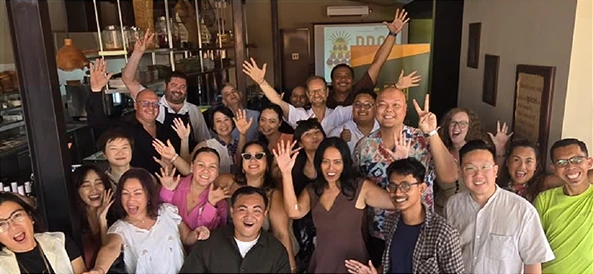
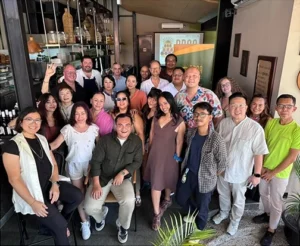
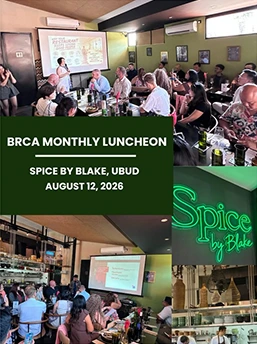
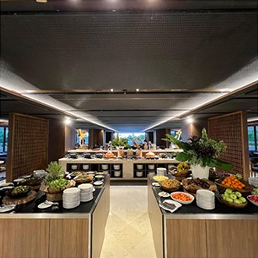
This month, we kept building the community, connecting, networking, and learning together as always. Our luncheon at Spice by Blake Ubud was a good one: great food, great company, and speakers who genuinely had something worth hearing.

MONTHLY LUNCHEON UPDATE
21 August 2026
BRCA Luncheon at Spice by Blake Ubud
Good Food Finds a Way
Chef Blake’s kitchen, our kind of afternoon
This luncheon at Spice by Blake Ubud was something special, thanks in large part to the warm hospitality of Chef Blake Thornley and his team. Chef Blake’s fun, friendly, occasionally cheeky demeanour set the tone from the start, opening with a short speech to thank all the guests before the event began.
With high season in full swing across Bali, many of our members couldn’t join us this time, busy keeping their own restaurants running. But the community that did show up made it count: smaller than usual, but lively and full of good food. A truly enjoyable afternoon, made even better by lovely speakers from Paradigm and WeDoo x Sayang.
Feasting at Spice by Blake
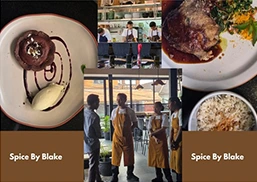
Now let’s talk about the food! You could really feel the passion Chef Blake and his team put into every dish. For starters, guests could choose between Spice Salad, Charred Pork Jowl, or Crab, all fresh and full of flavour.
The journey continued into mains, with a choice of Duck Leg, Coral Trout or Charred Seasonal Greens, each one better than the last. And then came dessert, the part everyone was waiting for. The restaurant’s iconic Chocolate Moelleux Tart had us smitten, and the Tempe Cereal was such a unique touch; guests couldn’t stop talking about it.
Overall, Spice by Blake is a wonderful place to host an event or gathering. It’s centrally located and easy to get to; the team is warm and welcoming, and most importantly, the food is genuinely good. The community left full and smiling, and truly grateful for the afternoon. A big thank you to Chef Blake and his kitchen team for the incredible hospitality, and to Anasya and Rando from PR & Marketing for putting it all together.
The Venue
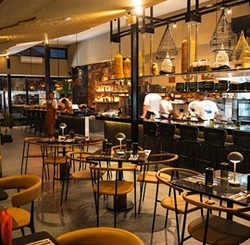
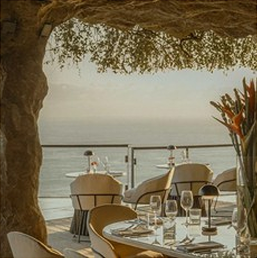
Spice by Blake is one of Ubud’s best dinner destinations, tucked right in the heart of Monkey Forest. Led by Chef Blake Thornley, the restaurant celebrates Indonesia’s rich culinary heritage with a bold, playful twist, serving up contemporary Indonesian cuisine in a vibrant yet relaxed setting, all while keeping sustainability close to heart.
The restaurant was awarded Best Modern Indonesian Restaurant at the Exquisite Awards 2025 by Exquisite Media, and it’s easy to see why. Every dish, cocktail and detail reflects a real love for the land and people behind Bali’s food culture, making Spice by Blake a true celebration of flavour, craft and community.
MONTHLY LUNCHEON SPEAKERS
Speaker of the Day: Peggy Putri –
Co-Founder, Paradigm
“PARADIGM’s guiding philosophy: ‘It’s more than soft skills, it’s life skills!”
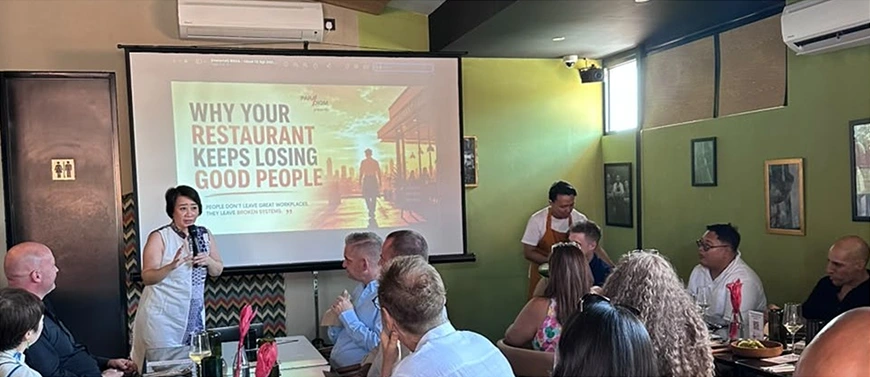
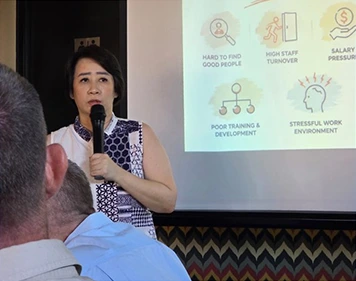
Peggy Putri, Co-Founder and Operational Director of PARADIGM, opened with a hard truth for the room: people don’t leave great workplaces, they leave broken systems.
Drawing on nearly 15 years in the service industry and her work training hundreds of clients and 10,000+ learners, Peggy broke down the real reasons restaurants struggle to hold onto good people, from high turnover and salary pressure to poor training and inconsistent systems, before walking through the 6 Principles of Excellent Culture and 3 practical ways to stop losing talent: building strong systems, building leader accountability, and empowering teams.
Her closing message stuck with the room: people join because of opportunity, stay because of leadership, and grow because of culture, a reminder that retention isn’t a program, it’s the result of a strong culture system led from the top.
About Paradigm

PARADIGM believes everyone deserves the chance to succeed, more than soft skills, they call it life skills. Founded in 2015 by H. Clay Myers and Peggy Putri, PARADIGM has spent the past 10 years serving hundreds of clients and over 10,000 learners across Indonesia. Built around three core pillars (Leadership, Communication, and Professional English), PARADIGM offers corporate training, one-on-one consulting and coaching, Business English training, seminars and workshops, and public online training (including collaboration with Program Prakerja) to help individuals and teams grow and adapt in a fast-changing world.
Gedung Permata Cikini, Lt. 3, Jl. Pegangsaan Timur No 7 Kel. Pegangsaan Kec. Menteng
https://paradigm.co.id
business@paradigm.co.id
MONTHLY LUNCHEON SPEAKERS
Speaker of the Day: Dimas Arka, Product Designer, Wedoo x Sayang
“Our goal is to provide tools and machinery to create a local circular economy in every island in Indonesia and beyond.”
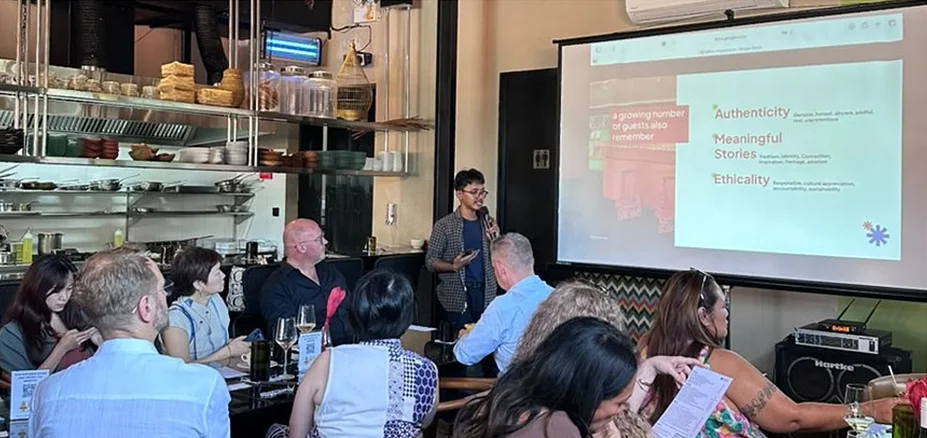
Dimas Arka, Product Designer at Wedoo x Sayang, asked a simple but powerful question: when guests leave a restaurant, what do they actually remember? Beyond good food and service, he pointed to a growing shift toward authenticity, meaningful stories, and ethicality, and introduced circular design as the practical way to deliver on it, turning waste into a resource instead of following the traditional “take-make-dispose” model.
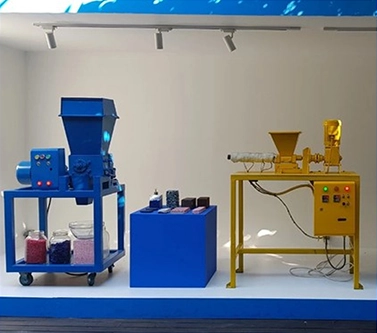
Drawing on Wedoo’s work as a Bali-based environmental consultancy (400+ locally manufactured machines, 300+ community partners), Dimas showcased real examples already reshaping local hospitality, from Desa Potato Head’s zero-waste recycling station to Kopi Nako’s cafe built from recycled cups and Munduk Moding Plantation’s recycledplastic furniture and decor. The message for BRCA members: circularity is becoming part of the guest experience itself, and Wedoo/Sayang are open to exploring partnerships.
About Wedoo and Sayang


Wedoo is a Bali-based environmental consultancy decentralising waste management through the manufacturing of innovative waste processing machines, offering tailored and scalable solutions, waste audits, machinery support, and upcycled products (via its design lab Sayang) to help individuals, villages, businesses, and NGOs build a local circular economy.
Sayang, powered by Wedoo, is a recycled design lab based in Sukawati, Bali, that transforms plastic waste into everyday products, furniture, and custom pieces, from hotel amenities and signage to recycled plastic boards and keychains. Beyond production, Sayang offers recycling factory tours, hands-on workshops, and event activations, giving visitors and communities a firsthand look at how waste can be turned into something worth keeping.
Jl. Raya Singapadu no. 199, Sukawati, Gianyar, Bali
https://wedoo.id
wedoobali@gmail.com
EVENTS & HAPPENINGS
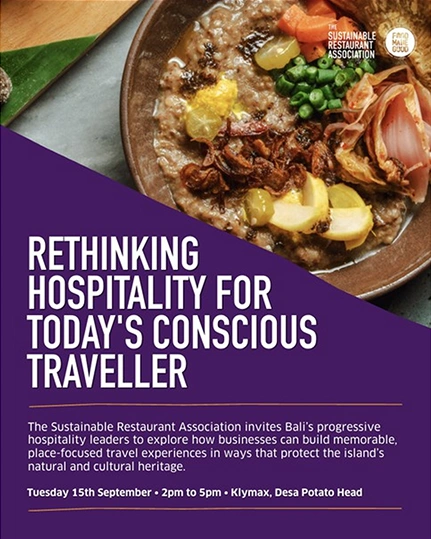
You’re invited: Rethinking Hospitality for Today’s Conscious Traveller
The Sustainable Restaurant Association invites progressive hospitality leaders from across Bali to explore how the islandʼs hospitality businesses can meet the needs of a new generation of conscious travellers while supporting the people, culture and natural systems that make Bali extraordinary.
Event details
Date: Tuesday 15th September
Time: 2 pm to 5 pm
Location: Klymax, Desa Potato Head
The afternoon will open with remarks from Juliane Caillouette Noble, CEO of The Sustainable Restaurant Association, followed by two panel discussions.
Regenerative hospitality in everyday operations.
Oliver TJ of Desa Potato Head, Eelke Plasmeijer and Ray Adriansyah of Locavore NXT, and Joshua Gardner of Begawan Biji will share their experience of running kitchens that aim not only to be sustainable, but regenerative. Theyʼll discuss the challenges theyʼve faced, what has worked and what hasnʼt, and why wider collaboration across Baliʼs hospitality and food systems is essential.
Turning sustainability ambitions into lasting impact.
Rahmi Fajar Harini of Eco Tourism Bali, Dito Prahadi of Locavore NXT and Maitri Fischer of Eco Mantra will discuss how hospitality businesses can turn sustainability goals into structured action. The conversation will cover what to measure, where to focus, and how certification and collaboration can support credible progress.
The event will close with networking, refreshments and canapés prepared by the Desa Potato Head team, with a focus on circular gastronomy.
Places are limited to two representatives per business and will be allocated on a first-come, first-served basis. Please reply to secure your place.
Please arrive promptly at 2 pm for welcome refreshments. The session will begin at 2:15 pm.
To register, please contact Naomi, Business & Community Manager – BRCA, at manager@balirca.id
EVENTS & HAPPENINGS
2026 Bali Good Food Month
A Great Island-Wide Culinary Collaboration
22 October – 14 November 2026
Bali Good Food Month is Coming!
From October 22 to November 14, BRCA is bringing you 24 days of island-wide culinary celebration. Get ready for unique collaborative dining experiences pairing Bali’s top chefs, restaurants, and cafés across venues island- wide- a chance to showcase Bali as a worldclass culinary destination, blending our rich traditional flavors with bold, innovative concepts, all while celebrating the strength of our local F&B community.
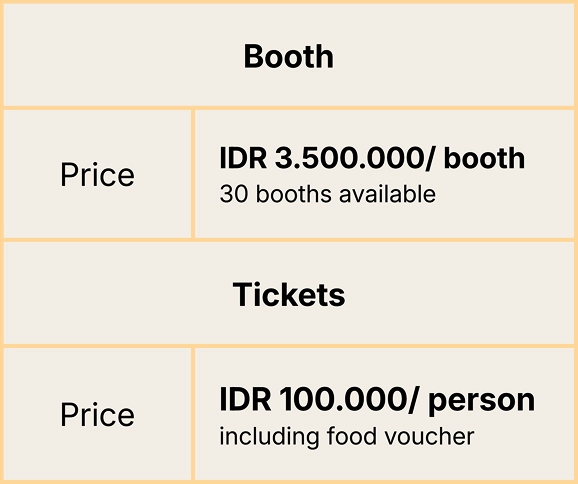
Whether you’re interested in participating in the gastronomy collaboration event, booking a booth for the closing event, or simply learning more, our team is here to help.
Food & Music Festival, The Collective Wrap: Bali Restaurant Guide Website Launch
Bali Good Food Month will wrap up in style with one-day Food & Music Festival at Suwarga Garden, Mövenpick Resort & Spa Jimbaran. Expect food and beverage booths from some of Bali’s favourite names, live music filling the garden, and hands-on workshops for guests to enjoy. It’s also a big day for BRCA, with the official launch of the Bali Restaurant Guide website happening live at the event.
Suwarga Garden at Mövenpick Resort & Spa Jimbaran
November 14, 2026
15.00 – 22.00

EVENTS & HAPPENINGS
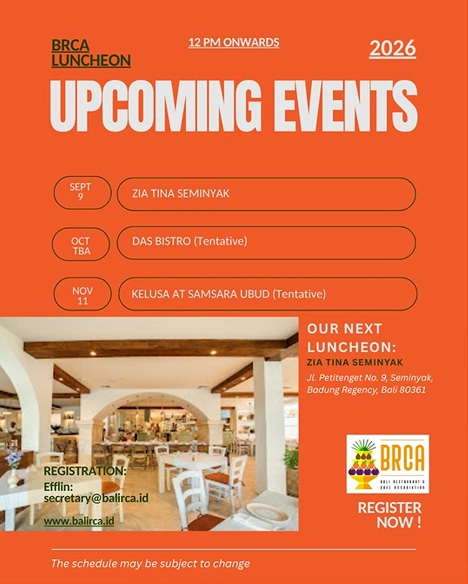
BRCA LUNCHEON at Zia Tina
You’re invited to the next BRCA Luncheon:
9 September 2026, 12 PM Onward at Zia Tina Seminyak
Jl. Petitenget No. 9, Seminyak, Kabupaten Badung, Bali 80361
Speakers:
Oliver TJ, Desa Potato Head, Culinary Director
Topic: Scaling Sustainability | Step by step towards a new model for hospitality.
Marisa Tania, Flow Haus Project, Group Director of Sales and Marketing
Topic: Building a Hospitality Brand Ecosystem Through Partnerships and Collaboration
To register, please contact Efflin, Secretary & Administration at secretary@balirca.id
This Month, We Didn’t Do It Alone



Thank You to Our Sponsors and Partners
This month’s lunches, drinks, and conversations were only possible because of the partners who showed up for them. Hatten Wines, Bir Bintang, Aqua Reflection, Island Brewing, Sukanda Djaya, and Honest Crab all put food and drinks on the table, literally. Gaia Digital Agency and Now! Bali got the word out and helped more of the community hear about what we’re doing. Alongside them, Global Extreme, Restomart, Multifortuna Sinardelta, Kantika Media, and Frisian Flag kept backing the work that matters so much to us.
Thank you for standing behind Bali’s F&B community with us. It’s more than we can really put into words, but we hope you feel it in everything we do together.


OUR SPONSORS
BRCA SUSTAINABILITY CORNER
From Fryer to Fuel
Meet the organizations turning Bali’s used cooking oil into biodiesel, education, and change
A green certificate used to be something for the lobby wall. A few photos, a press release, back to business as usual. That’s shifting. Guests are asking more questions, and corporate clients booking events want proof, not just a mention of “sustainability” on the website. And properties that take it seriously tend to run tighter operations too, less waste, lower bills, fewer surprises. Two Bali properties are examples that went through the process the right way, not for a headline, but as a continuation of work already underway.
Green Globe – Movenpick Resort and
Spa Jimbaran
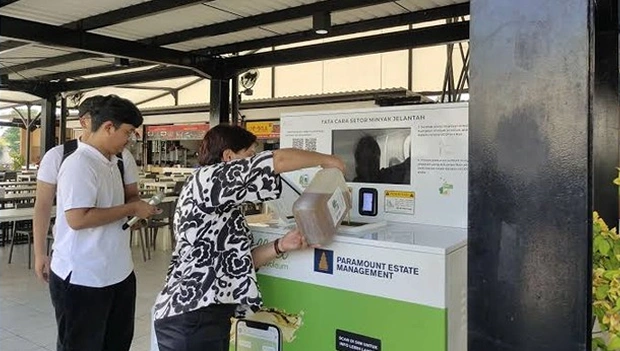
Bali’s restaurants, cafés, and hotels go through a lot of cooking oil, and what happens to it after it’s used matters more than most people realize. Indonesia generates up to 9.72 billion liters of used cooking oil (UCO) every year, roughly 35 liters per person. Yet only about 18.5% of it is properly collected. The rest gets poured down drains, dumped in yards, or worse, illegally filtered and resold as cooking oil. That kind of reuse has been linked to high cholesterol, heart disease, and cancer.
The good news is that UCO doesn’t have to be a problem. Collected and processed the right way, it becomes a valuable feedstock for biofuel, including sustainable aviation fuel, cutting carbon emissions and reducing our reliance on fossil fuels. Bali actually has a fairly established ecosystem of groups working on this, and it’s worth knowing who’s who.
Lengis Hijau
Lengis Hijau is where it all started. Founded in 2013 by Caritas Switzerland together with the Denpasar city government, it was Bali’s first non-profit social enterprise built around turning UCO into biodiesel. Through its business arm, PT Bali Hijau Biodiesel, it collects oil from hotels, restaurants, and community waste banks, then processes it into biodiesel under the Ucodiesel B100 brand, along with soap and candles. Its most well-known partnership is with Green School Bali, whose “Bio Bus” fleet runs entirely on this recycled fuel.
Noovoleum
Noovoleum takes a more tech-forward approach through its UCOllect system, which lets households, street vendors, restaurants, and hotels recycle their oil in exchange for a share of the revenue.
As General Manager Jan Kroeckel put it: “Our goal has always been to provide stays that feel warm, memorable, and sincere. Achieving Green Globe certification is a meaningful milestone that reflects our commitment to the island, its culture, and its future.”

Global Sustainable Tourism Council
(GSTC) – Viceroy Bali
It’s ISCC-EU and ISCC-CORSIA certified, and claims to redistribute over 8,000 rupiah per liter of UCO back into the community while cutting 1.28 kg of CO2 per liter collected.
TUKR
TUKR runs a simpler partnership model. Businesses agree on a pickup schedule, TUKR collects the oil, stores and filters it at their warehouse, then exports it to biofuel refineries, where it’s turned into fuel for transportation and electricity generation.
Greenbooks
Yayasan Green Books Indonesia flips the model around. Instead of paying businesses for their oil, it asks them to donate it to fund the Zero Waste School Program, which brings eco-education and waste infrastructure like composting and plastic-free canteens to Bali’s public elementary schools. So far the program has reached almost 20,000 children and cut single-use plastic use in participating schools by over 81%.
For BRCA members, partnering with any of these groups is a straightforward way to turn a waste product into a CSR or ESG win. It keeps oil out of Bali’s drains and waterways, supports the circular economy, and depending on which partner you choose, can help fund local education, support school transport, or bring in some extra revenue for your business.
THE F&B LOOP
Our F&B Heroes: Ramadani Yudha Prasetya
The Mind Behind the Soil Supplying Baliʼs Best Kitchens
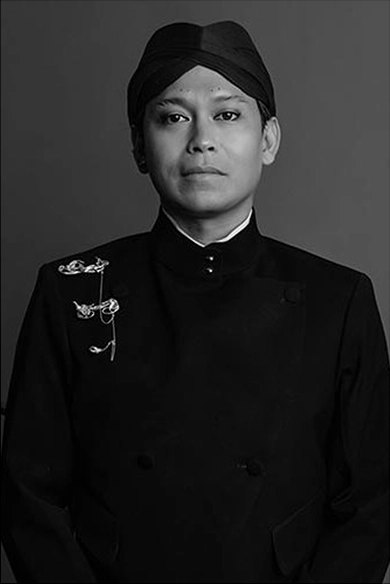
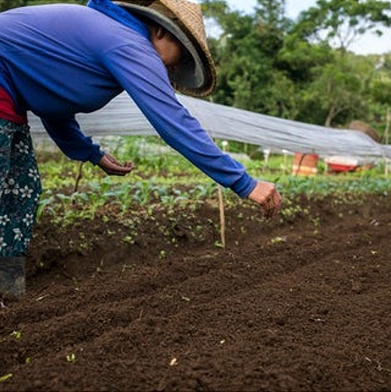
Bali’s dining scene gets a lot of love for its food and atmosphere, but the people growing what ends up on the plate rarely get the same spotlight. Rama is one of them. As the co-founder and COO of Island Organics Bali, growing organic vegetables and herbs for kitchens across the island.
His path here isn’t the usual one. Trained in forestry and botany, Rama spent years working with ginger and aroid plant families, breeding heirloom varieties, and developing his own hybrids. He’s been obsessed with orchids since he was 12, co-authored two books on native Indonesian orchids, and is active in the Indonesian Orchid Society. Before that, he led R&D at Mekarsari Fruit Garden, the world’s largest fruit garden collection, digging into forgotten tropical varieties most of us have never heard of. We sat down with Rama for a chat about a farmer’s life and what it really takes to keep Bali’s kitchens stocked with something worth eating.
QUESTION 01
“You studied Forest Science and Biology, and now work as a horticulturist, so plants have clearly been with you a long time. Where did it all start? Was there a specific moment that really sparked it?”
I actually spent quite some time trying to answer that question. When we were kids, I think we all had that one thing we loved collecting. Some people would collect comics, Tamiya, or figures. Mine were plants, specifically palms and aroids, and eventually I ended up working with orchids up until now.
QUESTION 02
“With so many local farmers around Bali, what makes Island Organics Bali different, in how you grow, what you grow, or how you work with kitchens?”
What makes us different is that we’re constantly experimenting with what could be grown in Bali. A lot of our work focuses on crops that aren’t commonly found in our market, sub-tropical and temperate crops people assume couldn’t thrive in a tropical climate.
Bringing those crops to thrive takes years of trial and error, testing countless combinations of seed sources, varieties, and cultivation methods before finding what actually works here (and it’s still ongoing).
Interestingly, we didn’t start growing these crops simply to be different. Our original goal was to increase biodiversity, one of the foundations of bio-intensive and natural farming. Over time, that philosophy led us to “novelty” crops that chefs couldn’t easily source elsewhere.
But I think the bigger difference is how we work with people. We’ve never seen ourselves as a supplier selling goods to kitchens. We’ve become part of Bali’s F&B community, so we try to understand how chefs actually work, their cuisine, their creativity, the challenges they face, and what they need from us. At the same time, we help them understand the realities of farming: seasonality, crop cycles, and why some varieties perform better than others depending on climate and elevation.
QUESTION 03
“You spent your university years at IPB, then five years in R&D at Taman Buah Mekarsari, both in Bogor, West Java. So how did Bali even come into the picture? What brought you here, and what made you want to get involved with Island Organics Bali?”
The initial reason was actually quite personal: I wanted to have a child, and Bali felt like a place where I could see that.
Professionally, I was looking for something aligned with my background in horticulture. What’s always interested me isn’t just the science itself, but how communities are built around it. I’ve always been drawn to community-based ecosystems where people are connected by a shared passion. When I came to Bali, I realized many of its businesses and local initiatives are highly community-driven. That’s what eventually led me to Island Organics Bali. Beyond producing vegetables, what attracted me was its community-based approach and the relationships with partner farmers and customers built around genuine community rather than conventional business transactions.
It’s a combination of all three. Curiosity is part of it, chefs inspire many of the ideas, and we’re also solving practical challenges in Bali’s growing conditions. That said, breeding isn’t easy or inexpensive. It requires years of work, significant space, and a lot of patience.
What motivates us differs slightly from conventional commercial breeding. Globally, a lot of crop breeding focuses on making life easier for growers: higher yields, better transportability, longer shelf life, greater uniformity. Those matter, but the end user, the chef or consumer, doesn’t always get the same attention.
We’re interested in a better balance. Longterm, we’d like to develop varieties with exceptional culinary value, better flavour, texture, and eating quality, while still resilient enough to grow well under Bali’s conditions. For now, we do as much R&D as we realistically can, given the regulatory and scale limits smaller farms like ours face compared to large seed companies. We keep experimenting and selecting promising lines to improve what we grow. Hopefully one day we’ll have the capacity to pursue breeding more intensively, not to become a seed company, but to develop varieties truly suited to Bali’s culinary landscape and the people who cook with them.
THE F&B LOOP
QUESTION 04
“Rama, let’s talk about the hybrid crops you’ve been developing, a skill rooted in your years doing R&D at Mekarsari. What’s the main driver behind these hybrids? Are you trying to solve a specific agricultural issue in Bali’s climate, meet direct chef requests for hard-to-source overseas veggies, or is it just satisfying your own R&D curiosity?”
Bali actually has a long tradition of collective biodynamic farming, such as Kerta Masa rice cultivation, where farming follows shared ecological principles through a wider agro-climate perspective. Our crops are significantly different, but that philosophy of working with nature rather than against it is something we can learn from.
Day to day, organic pest management isn’t something we focus on heavily. We practice multicrops, which naturally reduces the risk of pest and disease outbreaks. We apply local microorganisms to maintain healthy soil biology and use biopesticides only when genuinely needed. Because the farm is biologically diverse, pests rarely become an uncontrollable problem; they become part of the ecosystem rather than something we try to eliminate entirely. Some arthropods we collect even become feeders for our chickens, so theyʼre integrated into the farm system.
QUESTION 05
“You were among the early pioneers here, moving away from synthetic chemical pesticides. How difficult was it to establish those natural farming practices at first, and what does managing pests organically actually look like day-to-day on the farm?”
I think the biggest challenge wasn’t actually the farming techniques; it was changing people’s mindset.
In Indonesia, farming is still highly dependent on manual labour, and most farmers have been trained in conventional agriculture since the 1980s. Theyʼre used to solving problems with synthetic fertilizers and chemical pesticides. Natural farming requires a completely different way of thinking, and changing that mindset alone can take years.
THE F&B LOOP
QUESTION 06
“Let’s talk about the rising success of Bali’s restaurant scene. As Bali’s dining scene expands right now, how might that shift affect local family farms and producers? Where do you see the main disconnect between what restaurants expect and what farms can actually deliver, and how do we bridge that gap?”
It’s important to understand the context behind “local family farms.” In Bali, most agricultural businesses are family-based, with a very different structure from commercial farms.
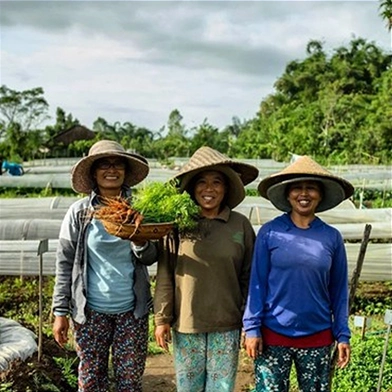
When we talk about “farmers” in Indonesia, we’re usually talking about grower experts. They’re highly skilled in the field, but most have never been exposed to the broader food system: market demand, supply chains, pricing, or how restaurants operate. In most Western countries, farming is a bigger enterprise. Here, it’s often seen as exclusive field labor at the end of a long supply chain.
Historically, that connection has almost always been mediated by a middleman. I don’t think middlemen are inherently bad; a good one plays an important role. The problem is when the supply chain becomes long-winded, and farmers and end users stop understanding each other.
A chef may ask for consistency, specific varieties, or a particular flavor profile, while many farmers have never seen how those ingredients are used in a professional kitchen, let alone eaten at the restaurants they supply. So it’s hard for them to understand why one type of romaine is preferred over another, or why harvest timing matters. On the other side, restaurants often don’t understand the realities of farming: seasonality, weather, pests, the limits of growing naturally.
We spend our time translating between both worlds. We help chefs understand farming, and we help farmers understand what creates value in the kitchen: quality, flavor, consistency, culinary application, not just yield. We take the same approach with our partner farmers. We don’t just ask them to grow crops for us. We provide technical support, share knowledge, and guarantee the market, while they build skills beyond cultivation itself. Growing is an art, but farming is a business.
So as Bali’s restaurant scene grows, I don’t think the opportunity is simply to buy more from local farmers. The real opportunity is to rebuild a relationship that never truly existed in the first place. Stronger communication and fair partnership between farms, intermediaries, and kitchens makes the whole food system stronger, for restaurants and farming communities alike.
THE F&B LOOP
QUESTION 07
“Finally, agriculture in Bali is facing a massive generational crisis—young people are moving toward hospitality, farmers are getting older, and farmland is being sold off. In the long run, this directly threatens our F&B industry. How can we make agropreneurship attractive and financially secure for the next generation, so Bali doesn’t lose its farming foundation?”
The first step is changing the image of farming itself. Farming has to become something people aspire to – not something they feel they have to do because they have no other option. In other words, farming has to become “sexy.” Interestingly, we’re already starting to see that shift, especially among expatriates and people who’ve been exposed to agricultural systems in Europe, Australia, or North America. They often see farming as innovative, entrepreneurial, and closely connected to sustainability and food culture. The challenge is that many young Indonesians simply don’t have the same exposure.
At Island Organics Bali, we manage farming to be creative, knowledge-driven, and commercially viable; on top of that, we’re also realistic. We’re a civil-owned entity – we’re not policymakers. We don’t create regulations, subsidies, or national agricultural programs. Many organisations, NGOs, and initiatives are helping to move things forward, but without supportive policies, these efforts can only go so far.
I believe the most effective way to attract the next generation is to position agriculture as an essential part of Bali’s hospitality industry, rather than treating it as a completely separate sector. Farming shouldn’t sit outside the food and beverage ecosystem – it should be recognised as one of its foundations. Every successful restaurant begins with great ingredients, and every great ingredient begins with a sustainable farm.
As for concerns about shrinking farmland, I’m actually a little less pessimistic than many people. Indonesia has experienced a dramatic decline in the percentage of its population working in agriculture since independence, yet we haven’t experienced widespread food shortages because agricultural productivity has also improved through intensification and better technology.
For me, the bigger conversation isn’t only about producing more food – it’s also about treating food wiser. The end user especially, plays a major role. Reducing waste, valuing seasonal produce, and consuming more efficiently are just as important as increasing production. A resilient food system depends on both sides: farms producing responsibly and consumers appreciating and using those products responsibly.
THE F&B LOOP
QUESTION 06
“Let’s talk about the rising success of Bali’s restaurant scene. As Bali’s dining scene expands right now, how might that shift affect local family farms and producers? Where do you see the main disconnect between what restaurants expect and what farms can actually deliver, and how do we bridge that gap?”
It’s important to understand the context behind “local family farms.” In Bali, most agricultural businesses are family-based, with a very different structure from commercial farms.
QUESTION 07
“Finally, agriculture in Bali is facing a massive generational crisis—young people are moving toward hospitality, farmers are getting older, and farmland is being sold off. In the long run, this directly threatens our F&B industry. How can we make agropreneurship attractive and financially secure for the next generation, so Bali doesn’t lose its farming foundation?”
The first step is changing the image of farming itself. Farming has to become something people aspire to – not something they feel they have to do because they have no other option. In other words, farming has to become “sexy.” Interestingly, we’re already starting to see that shift, especially among expatriates and people who’ve been exposed to agricultural systems in Europe, Australia, or North America. They often see farming as innovative, entrepreneurial, and closely connected to sustainability and food culture. The challenge is that many young Indonesians simply don’t have the same exposure.
At Island Organics Bali, we manage farming to be creative, knowledge-driven, and commercially viable; on top of that, we’re also realistic. We’re a civil-owned entity – we’re not policymakers. We don’t create regulations, subsidies, or national agricultural programs. Many organisations, NGOs, and initiatives are helping to move things forward, but without supportive policies, these efforts can only go so far.
BALI TOURISM & HOSPITALITY
Bali Tourism Snapshot
Bali 1st Semester January – June 2026
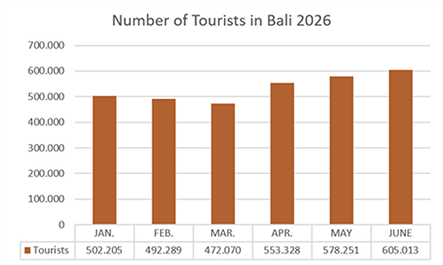
So, how’s Bali doing in the first half of this year? Despite a slow start in 2026, mainly due to geopolitical tensions, Bali is regaining momentum. Foreign arrivals climbed to 605,013 in June, up 4.63% from May’s 578,250, a solid sign that things are picking back up. Australians remained the dominant market, making up nearly 26% of all arrivals in June.
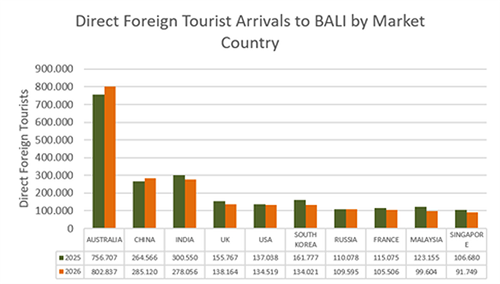
Australian tourists led the first half of 2026 with a 25.06% share, up 6.10% year on year. China, India, the UK and the USA rounded out the top five, with China’s 7.77% growth pushing it into second place and India down to third at 8.9%. South Korea, Russia, France, Malaysia and Singapore completed the top ten. Most source countries saw arrivals dip in H1, but Australia, China, Japan, Taiwan, Canada and Turkey were the exception, all posting growth.
Meanwhile, Colliers has released its Q2 Bali Hotels Report, highlighting insights about Bali’s hotel market. Bali’s hotel market is moving into a more selective, value-driven phase. Visitor arrivals are expected to keep improving through the second half of the year, but growth is uneven now, shaped by global uncertainty, pricier domestic travel and stiffer competition from places like Thailand and Vietnam. Luxury hotel investment keeps expanding regardless, a sign developers still believe in Bali longterm. The winners going forward won’t be the hotels chasing the most guests, but the ones offering something real: wellness, authentic experiences, personalised service.
Source: Colliers, Bali Hotel Quarterly Forecast Report, July 2026.
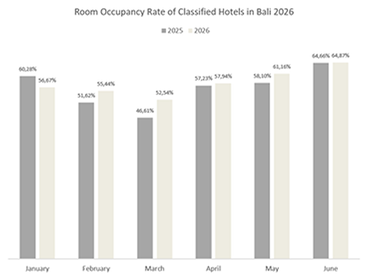
Room occupancy kept climbing through the first half of 2026. June 2026 came in at 64.87%, slightly up from 64.66% in June 2025, and a 3.71 percentage-point jump from May 2026’s 61.16%.
Guests are staying longer overall in the first half of 2026 versus 2025. In June 2026, length of stay dropped to 2.86 nights, down 0.18 points from May 2026’s 3.04 nights. Year on year, though, it’s still up 0.18 points.
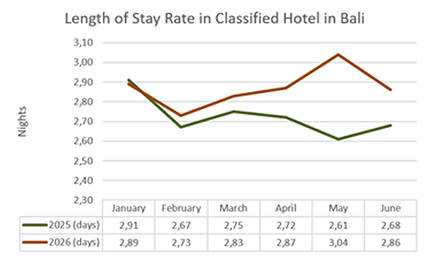
In the first half of 2026, the culinary ecosystem has absorbed global macroeconomic shocks and is stronger and more resilient. This resilience is backed by Bali’s impressive 5.78% Q2 economic growth, with accommodation and food service continuing to lead the islandʼs economy.
Supported by a demographic pivot toward high-spending Asian and Australian markets, the remainder of H2 looks promising for an island that aims to bring 6.5 million foreign visitors this year, with a focus on high-value tourism as opposed to mass transit.
Source: Disparda & BPS Bali
SIGNING UP INVITATIONS
SIGNING UP INVITATIONS TO OUR INDUSTRY COLLEAGUES
Built by People Who Care About This Industry
Bali’s dining scene thrives because of the people behind the line, on the floor, and in the fields – operators who care about doing things right.
BRCA exists to support that work. We bring together founders, chefs, and industry leaders to strengthen local supply chains, share real operational knowledge, and elevate the island’s hospitality standards together.
We are also actively building partnerships with brands and organizations that want to invest in the long-term future of Baliʼs F&B ecosystem.
To explore membership, discuss sponsorship opportunities, or get involved: Naomi at manager@balirca.id

Closing BRCA & You!
“Our approach is to show, not just tell… We aim to inspire others by running a restaurant that is enjoyable, sustainable, and respectful to everyone – our team, partners, and farmers.”
Eelke Plasmeijer, Co-Chef-Owner of Locavore NXT (No. 44, Asiaʼs 50 Best Restaurants 2026)
That constant push to raise the bar while respecting our local roots is what drives our mission at BRCA. Elevating Bali’s dining scene to a world-class level takes solid kitchen standards, strong local supply chains, and active leadership across our industry.
Our board brings decades of hands-on F&B experience to this work, and we are opening a few leadership seats for operators and founders who want to help guide where Baliʼs dining culture goes next. If you’re ready to step up and shape our community, reply to this email or reach out to us directly.
Founders
Dean Keddell – Ginger Moon Restaurants & Author of Our Bali Your Bali – Bali Kita Bali Kamu
Chris Salans – Mozaic
Anthony Syrowatka – Viceroy Hotel, Aperitif, Blossom + others & Gaia Digital Marketing Agency
Board
Weni Ariasty – Manager NOW! Bali & the BRCA treasurer
Ana Dewi – Mövenpick Resort & Spa Jimbaran Bali – HACCP
Peter Dundas – Advisor
Maria Efflin – Secretary/Administrator, BRCA
Naomi Tribuana Festilani – Business and Community Manager BRCA
Rahmi Fajar Harini – Eco Tourism Bali & Sustainability Advisor
Kertawidyawati (Widya) – BRCA President
Maudy Maha – Marketing Advisor
Jeroen Van Overbeek – Social Impakt, Bali Coop & BRCA Vice President
Min Siah – Wheatfields Bakery, Starter Lab – Advisor
Heru Dwi Soesilo – 2080 Burger & an events, branding & marketing guru
Thank you for reading this newsletter. Sampai Jumpa!
Welcome New Members to BRCA!
With culinary regards,
Naomi Tribuana Festilani
Business & Community Manager BRCA
On Behalf of BRCA Founders & Board